
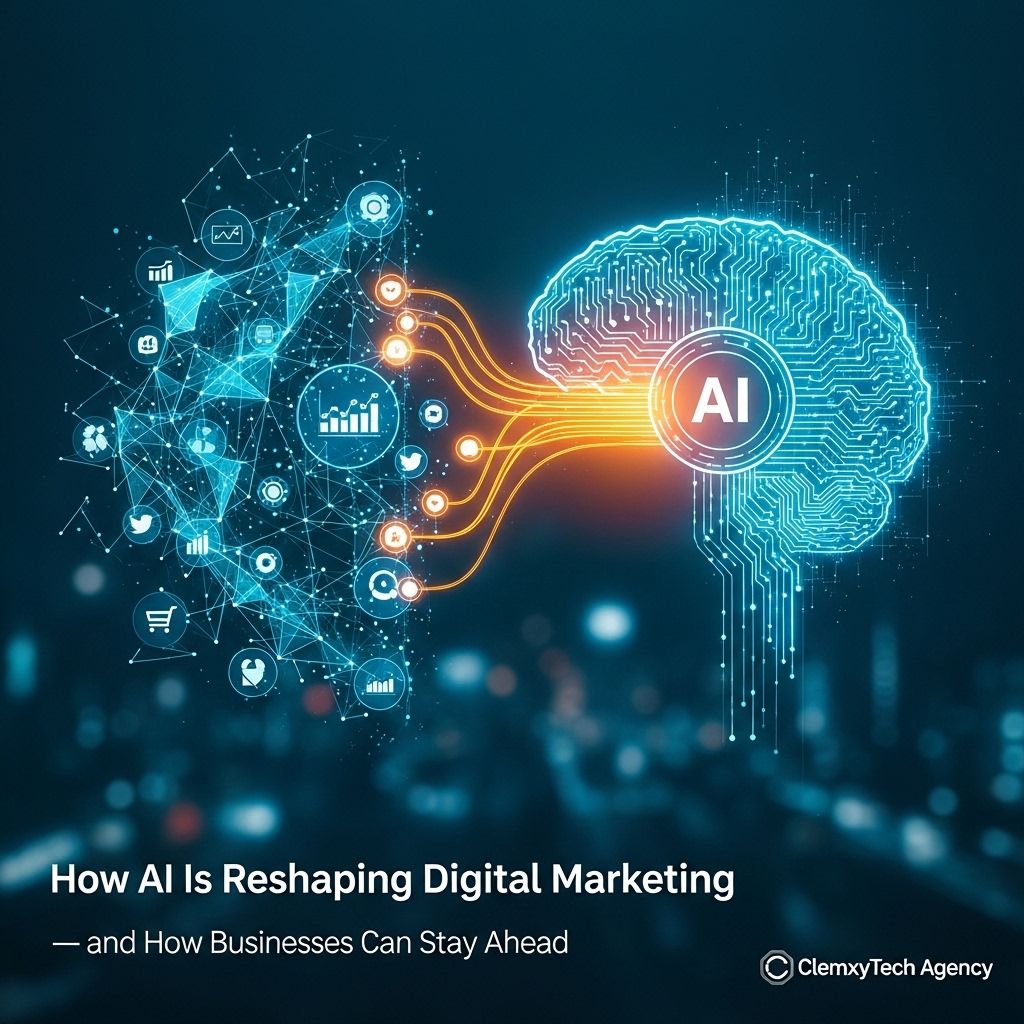
How AI Is Reshaping Digital Marketing, How Businesses Can Stay Ahead

Introduction

Artificial Intelligence has moved from hype to execution. Today, businesses that leverage AI in their marketing are responding faster, converting better, and operating more efficiently than competitors still relying on manual processes.

However, the real advantage doesn’t come from using AI—it comes from using AI correctly.

This article explains how AI is reshaping digital marketing and how businesses can adopt it strategically without wasting resources or damaging brand trust.


The Shift From Manual Marketing to Intelligent Systems

Traditional marketing requires constant manual effort—campaign setup, lead follow-ups, reporting, and optimization. AI changes this by introducing systems that learn from data and optimize continuously.

AI-powered marketing systems enable:

  • Automated lead qualification and routing

  • Real-time campaign optimization

  • Smarter audience segmentation

  • Personalized user experiences at scale

This shift allows businesses to grow faster without proportionally increasing team size.

Where AI Delivers Immediate Marketing Wins

1. Lead Handling & Customer Engagement
AI agents respond instantly to inquiries, qualify leads, and ensure no opportunity is missed—especially outside business hours.

2. Campaign Performance Optimization
AI analyzes ad performance, user behavior, and conversion data to refine targeting and creatives faster than manual teams.

3. Personalization Across Channels
From email marketing to website experiences, AI enables tailored messaging that significantly improves engagement and conversion rates.

Many businesses know these benefits exist but struggle with implementation. This is where expert guidance becomes critical.


Why AI Without Strategy Often Fails

AI tools alone do not guarantee results. Poor setup, lack of clear objectives, or over-automation can lead to wasted spend and weak customer experiences.

Common mistakes include:

  • Automating without defined funnels

  • Using AI without brand voice control

  • Ignoring data quality and tracking

  • Relying on tools without integration strategy

This is why businesses increasingly seek AI strategy consultations before deploying automation.


Benefits of a Well-Implemented AI Marketing System

  • Faster lead response and higher conversions

  • Reduced operational and marketing costs

  • Scalable growth without operational chaos

  • Better customer experience and consistency

  • Clear performance insights and optimization

When implemented correctly, AI becomes a growth multiplier—not a risk.


How to Start With AI the Right Way

The smartest starting point is identifying repetitive, high-impact tasks—lead responses, follow-ups, reporting, and segmentation—and automating them with a clear growth objective.

If you’re unsure where to begin or how to structure this properly, a professional consultation can save months of trial and error.

👉 ClemxyTech Agency offers a free consultation to help businesses:

  • Identify AI opportunities in their marketing

  • Design practical automation strategies

  • Avoid costly setup mistakes

  • Build scalable, ROI-driven AI systems

Final Insight

AI is no longer optional in digital marketing, but strategy is non-negotiable. Businesses that combine AI with expert planning, data, and execution will outperform those relying on tools alone.

If you’re considering AI for your marketing or already experimenting without clear results, booking a free consultation with ClemxyTech Agency is the fastest way to gain clarity and direction.


Expert Note: AI doesn’t replace marketing expertise, it amplifies it. The strongest results come when automation, strategy, and execution are aligned from day one.
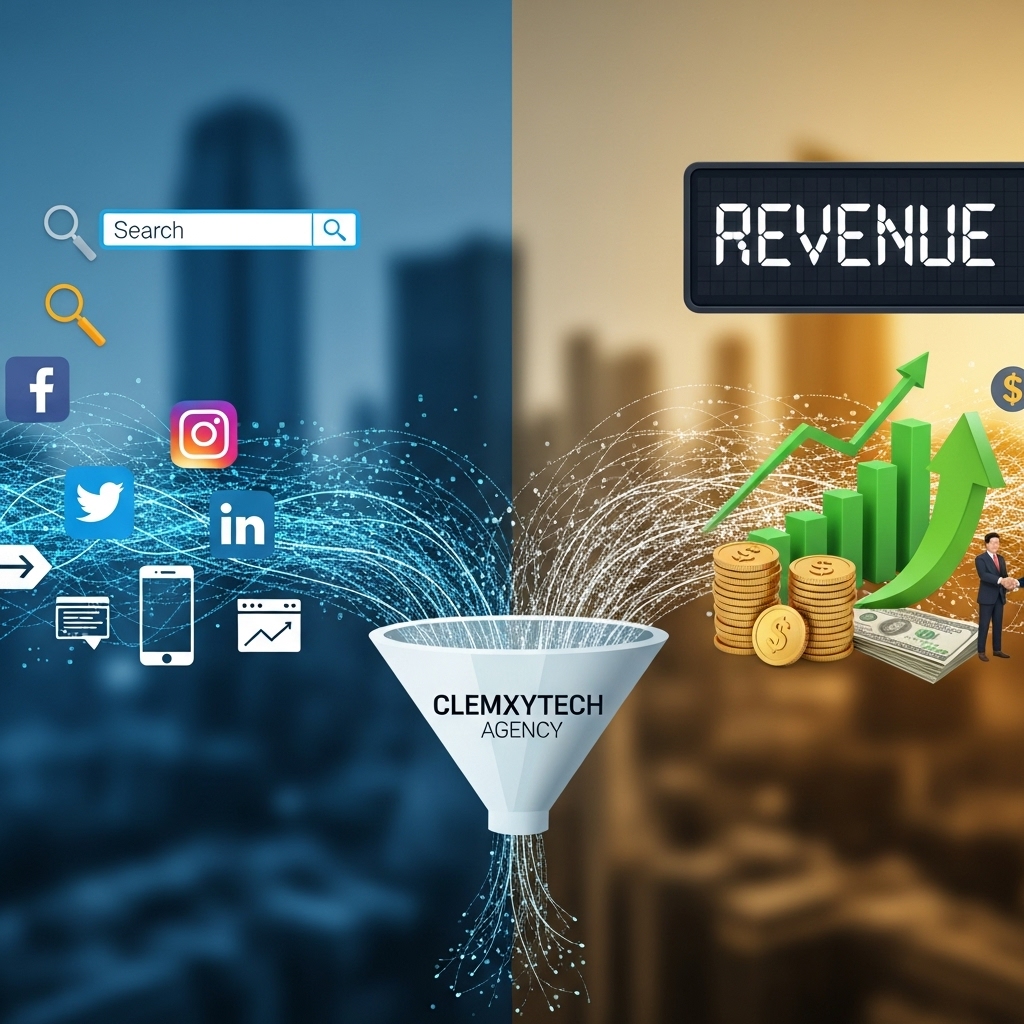
From Traffic to Revenue — Turning Digital Visibility Into Business Growth

Introduction

Many businesses celebrate website traffic, social media reach, or impressions—but still struggle to make sales. Visibility without conversion is noise. Real growth happens when traffic is guided through a structured conversion system.

This article explains how to turn digital presence into measurable business revenue.


The Traffic Myth

Traffic is only the first step. Without a system to capture, nurture, and convert users, even high traffic volumes produce little value.

Common mistakes:

  • Sending traffic to generic pages

  • No lead capture mechanism

  • Weak value propositions

  • No follow-up or nurturing strategy


Building a Conversion-Focused Funnel

A funnel transforms interest into action. Every business—regardless of size—needs a clear path for users.

Core funnel stages:

  1. Attraction – Ads, SEO, content, social media

  2. Engagement – Landing pages, value-driven messaging

  3. Conversion – Forms, offers, calls-to-action

  4. Retention – Email marketing and automation

Each stage must be intentionally designed.

Why Automation Is Critical for Scale

Manual follow-ups and inconsistent communication limit growth. Automation ensures no opportunity is lost.

Automation enables:

  • Instant lead responses

  • Consistent nurturing sequences

  • Personalized user experiences

  • Scalable growth without extra workload


Optimizing for Long-Term Revenue

Sustainable marketing focuses on customer lifetime value—not one-time conversions. Businesses that invest in retention outperform those that chase only new leads.

Optimization areas:

  • Email marketing and re-engagement

  • Upsells and repeat offers

  • Performance analytics and testing

  • User experience improvements


Benefits of a Revenue-Focused Marketing System

  • Higher conversion rates

  • Predictable lead flow

  • Increased customer lifetime value

  • Better alignment between marketing and sales

  • Stronger brand trust

Final Insight

Visibility is easy. Revenue requires structure. Businesses that connect traffic, conversion, and automation build marketing systems that grow consistently—regardless of market changes.

Why Most Digital Marketing Campaigns Fail, How to Fix Them

Introduction

Digital marketing is everywhere—yet many businesses struggle to see real returns. Ads run, content is posted, emails are sent, but conversions remain low. The problem is not marketing itself; it’s how marketing is executed.

This article breaks down why campaigns fail and outlines a proven framework for building high-performing, ROI-driven digital marketing systems.


The Core Problem: Activity Without Strategy

Many businesses focus on doing marketing instead of building a marketing system. Running ads without a funnel, posting content without intent, or sending emails without segmentation leads to wasted spend and poor results.

Common failure points include:

  • No defined customer journey

  • Weak targeting and messaging

  • Lack of data-driven optimization

  • Disconnected tools and platforms

What High-Performing Marketing Actually Looks Like

Successful marketing starts with clarity and alignment. Every campaign should connect traffic, messaging, user experience, and conversion into one flow.

Key pillars:

  • Clear audience positioning

  • Funnel-based campaign design

  • Conversion-focused landing pages

  • Data tracking and continuous optimization

Marketing should guide users from attention → trust → action, not leave them guessing.


How Data Transforms Marketing Results

Data is the difference between guessing and scaling. Businesses that track performance consistently outperform those that rely on intuition.

Effective data usage includes:

  • Monitoring click-through and conversion rates

  • Understanding user behavior on pages

  • Identifying drop-off points in funnels

  • Refining campaigns based on real insights


Benefits of a Strategic, Data-Driven Approach

  • Higher ROI on ad spend

  • Better-qualified leads

  • Consistent and predictable growth

  • Reduced waste in marketing budgets

  • Clear visibility into what works


Final Insight

Marketing success is not about running more campaigns—it’s about running smarter systems. Businesses that invest in strategy, data, and execution alignment create sustainable growth instead of short-term spikes.